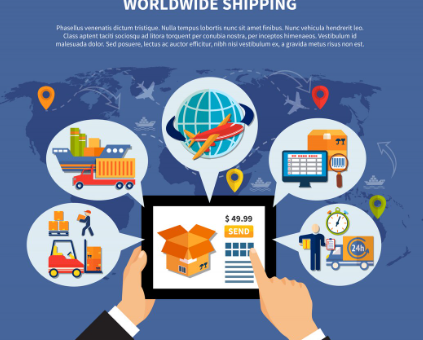
Growing an import export business requires more than finding international customers and reliable suppliers. Successful global companies depend on efficient logistics systems that control costs, improve delivery speed, and create better customer experiences. Understanding How to Scale Your Import Export Business with Smart Logistics helps businesses build a stronger foundation for international expansion.
Smart logistics combines technology, data, automation, and strategic planning to improve the movement of goods across borders. Instead of managing shipments manually, modern businesses use intelligent systems to optimize transportation, inventory, warehousing, and supply chain operations.
Whether you are an established importer, exporter, or entrepreneur running an online business, logistics efficiency directly affects profitability. Many digital entrepreneurs also explore affiliate marketing, build a dropshipping business, or compare affiliate vs dropshipping models while creating additional passive income streams. In every model, efficient operations create stronger growth opportunities.
Why Smart Logistics Is Important for Import Export Growth
How to Scale Your Import Export Business with Smart Logistics starts with understanding the role logistics plays in global commerce. As businesses expand internationally, they face more complex challenges, including longer transportation routes, customs requirements, inventory management issues, and customer expectations.
Smart logistics helps businesses:
- Reduce shipping expenses
- Improve delivery accuracy
- Increase supply chain visibility
- Manage inventory efficiently
- Reduce operational risks
- Expand into new markets
A strong logistics strategy allows companies to scale without losing control of their operations.
Analyze Your Current Logistics Operations
Before scaling, businesses should evaluate their current logistics performance. Understanding existing problems makes it easier to create improvement strategies.
Analyze areas such as:
- Shipping costs
- Delivery times
- Supplier performance
- Warehouse efficiency
- Inventory accuracy
- Customer complaints
A detailed logistics review identifies opportunities to reduce waste and improve productivity.
Use Technology to Improve Supply Chain Management
Technology is one of the biggest drivers of modern logistics growth. Digital tools allow businesses to monitor shipments, analyze data, and make faster decisions.
Important logistics technologies include:
- Transportation management systems
- Warehouse management software
- Real-time tracking platforms
- Artificial intelligence tools
- Cloud-based supply chain systems
Technology improves visibility and reduces manual errors throughout the supply chain.
Businesses can learn more about global technology solutions from Supply Chain Management Technology.
Optimize International Shipping Processes
Shipping efficiency is essential for import export growth. Poor shipping decisions can reduce profit margins and create customer dissatisfaction.
Businesses can optimize shipping by:
- Choosing suitable transportation methods
- Comparing carrier rates
- Consolidating shipments
- Planning efficient routes
- Reducing unnecessary handling
For more cost-saving strategies, explore our guide on How to Reduce Shipping Costs in Your Import Export Business.
Improve Supplier Management
Reliable suppliers are essential for scaling international trade operations. A weak supplier network can create delays, quality issues, and increased costs.
Strong supplier management includes:
- Evaluating supplier reliability
- Maintaining clear communication
- Monitoring product quality
- Creating long-term partnerships
- Developing backup suppliers
Businesses should regularly review supplier performance to maintain consistent operations.
Build a Scalable Warehouse Strategy
Warehouse operations become more complex as businesses grow. A scalable warehouse system ensures products are stored, managed, and delivered efficiently.
Effective warehouse strategies include:
- Organized inventory systems
- Automated storage solutions
- Efficient picking processes
- Accurate stock monitoring
- Strategic warehouse locations
Smart warehousing reduces delays and improves order fulfillment.
Improve Inventory Management
Inventory management is one of the most important parts of scaling an import export business. Too much inventory increases storage costs, while too little inventory causes missed sales opportunities.
Smart inventory management involves:
- Demand forecasting
- Real-time stock monitoring
- Automated inventory alerts
- Seasonal planning
- Supplier coordination
Better inventory control improves cash flow and customer satisfaction.
Automate Customs and Documentation Processes
International trade requires accurate documentation. Errors can cause customs delays, additional fees, and shipment problems.
Businesses should automate and organize:
- Commercial invoices
- Packing lists
- Export documents
- Import records
- Compliance information
Automation reduces paperwork errors and speeds up international transactions.
Create a Strong Freight Forwarding Strategy
Freight forwarders help businesses manage complex international transportation processes. The right logistics partner can simplify global shipping and improve efficiency.
A professional freight forwarding partner can assist with:
- Carrier selection
- Customs clearance
- Shipment tracking
- Transportation planning
- International compliance
Learn more through our guide on Best Freight Forwarding Solutions for International Trade Success.
Use Data Analytics for Better Decisions
Data analytics allows businesses to understand logistics performance and identify improvement opportunities.
Companies can use data to:
- Predict demand
- Reduce delivery delays
- Identify cost problems
- Improve supplier performance
- Optimize transportation routes
Data-driven decisions help businesses scale with confidence.
Develop a Risk Management Strategy
Global trade involves many risks, including supplier disruptions, transportation problems, and economic changes. Businesses need strategies that protect operations during unexpected events.
Risk management methods include:
- Diversifying suppliers
- Creating backup shipping plans
- Maintaining safety inventory
- Monitoring global events
- Building flexible supply chains
For additional guidance, read our article on Supply Chain Risk Management Strategies for Global Businesses.
Improve Customer Delivery Experience
Customers expect fast, accurate, and transparent delivery. Logistics performance directly affects customer loyalty.
Businesses can improve delivery experiences by:
- Providing shipment tracking
- Offering accurate delivery estimates
- Reducing order delays
- Improving communication
A better delivery experience creates repeat customers and stronger brand reputation.
Sustainable Logistics for Long-Term Growth
Sustainability has become increasingly important in global business. Companies are adopting environmentally responsible logistics practices to reduce costs and meet customer expectations.
Sustainable logistics strategies include:
- Optimizing transportation routes
- Reducing packaging waste
- Using efficient vehicles
- Improving warehouse energy usage
Sustainable operations can improve efficiency while supporting long-term business growth.
How Smart Logistics Supports Online Business Models
Modern logistics has created new opportunities for entrepreneurs. Small businesses can now access global suppliers, international customers, and professional fulfillment services.
Entrepreneurs building an online business can use smart logistics to improve customer satisfaction and compete with larger companies.
Those considering affiliate vs dropshipping should understand that a dropshipping business requires strong supplier coordination and reliable shipping processes. Meanwhile, affiliate marketing focuses on promoting products without managing inventory or fulfillment directly.
Both approaches can support entrepreneurs seeking additional passive income, but efficient business systems remain important for long-term success.
Common Logistics Scaling Mistakes
Many growing businesses experience problems because they expand without improving their logistics systems.
Common mistakes include:
- Ignoring technology investments
- Using unreliable suppliers
- Failing to monitor costs
- Poor inventory planning
- Lack of risk management
A strategic approach prevents costly mistakes during expansion.
Future of Smart Logistics
The future of logistics will continue to focus on automation, artificial intelligence, sustainability, and digital connectivity.
Future trends include:
- AI-powered forecasting
- Autonomous transportation
- Smart warehouses
- Blockchain tracking
- Predictive analytics
Businesses that adopt these technologies will be better prepared for global competition.
Conclusion
How to Scale Your Import Export Business with Smart Logistics requires a combination of technology, strategic planning, supplier management, and operational efficiency. Smart logistics allows businesses to reduce costs, improve customer experiences, and expand into international markets with confidence.
